Wednesday, December 13, 2023

Representation Analysis

 Representation Analysis

Boys Meet World, a popular 90s teen sitcom, focuses on the life experiences and relationships young American students undergo as they enter new settings. This TV show uncovers the issues and progressive aspects that accumulate within friendship and family. The characters, visual elements, and events are chosen to provide an overview of what message the creators are trying to establish. The concepts broadcasted advocate belief in oneself and others. In this case, the episodes represent middle school students exposed to different social circumstances and how most deal with these situations.

The production acquires diverse characters regarding social and economic differences, family environments, and sociocultural views. The three main childhood characters, Cory, Shawn, and Topanga, embodied these contrasts and illustrated how they tackled their difficulties by helping each other. These actors demonstrate the struggles kids face as they grow up. Many incorporate heavy topics such as peer pressure, underage drinking, prejudice, misconduct, and mistreatment. Although the show's prior episodes began in the middle school setting, these events progressed after entering high school and college. Hence, it symbolizes that most issues occur as adolescents mature; they begin to question and experience change.

    Cory Mathew came from a white middle-class family with two hard-working parents, an older brother, and a young sister. The character depicts the individual that every friend finds approachable and goofy. Cory's lifestyle revolved around his friends and the girl he liked, Topanga. Most of the action was established at school, but the other scenes were shot at Cory's house, indicating his role as the main protagonist. As an American boy who grew up in Philadelphia, his interests coordinated with Philadelphia’s favorite sport, baseball. Figure 1 shows Cory dressed in a baseball outfit on career day, indicating that he is less interested in academics. His witty and friendly personality is demonstrated by his snarky comments with other students and his teacher, Feeny. His jokes and remarks are followed with laughing sound effects to keep the audience engaged. As the seasons progress, he changes as situations occur with him and his friends. He became profoundly affectionate and caring, unable to resist change, like drifting from his friendship with Shawn and Topanga as the school years progressed. Which many high schoolers find trouble in when transitioning from high school to college. Before the sixth season, the students are waiting for their college acceptance letters, and Cory finds it challenging that he and his friends might take other paths.

            Due to his relationship with Topanga, their love augments through the battles and resistance of other love interests. Topanga’s parents were overly affectionate and peaceful; thus, her image included a hippie-like wardrobe and her character as the weird, smart kid. Topanga was concerned about global issues and harmony. Cory initially did not want to demonstrate his affection because he found her long, frizzy hair and appearance odd. After season 3, her image frequently became that of a beautiful girl who deeply cared for her friends. She wore her hair straight and dressed up, exemplifying the recurring phase that young girls experience. The transition was discussed in season 4, episode 2, where Topanga took drastic measures to prove to Cory that looks do not matter, but she soon realized she cared more for her appearances than she realized. This tole broadcasted that many girls soon realize that beauty becomes an essential factor in their life than they think.

            Like Cory's parents, Cory and Topanga’s love progressed to a young marriage. After graduating high school, a composed girl like Topanga made an irrational decision to ask Cory for marriage. This approach was unusual in Western films since they showcased women from a dominant and risk-taking standpoint. However, these situations spiraled after Cory’s parents found out. The strict but loving home Cory’s parents provided targeted parents who underwent this situation and demonstrated their concerns and their response to these circumstances. Only after Topanga began doubting her decision when her parents split up in later episodes did they pursue their marriage dream. These scenes demonstrate parents' impact on their children's decision-making and emotions. These circumstances led the characters to inquire about love and faith. Many of these are portrayed in real-life relationship doubts.

            Shawn is a troublemaker who wears leather jackets and is a famous womanizer. In his life, he lived in a trailer with a low-income family. His character is essential to Cory's best friend since elementary school. Priority, they worked throughout their school years chasing popularity. Their friendship clearly shows the equal balance of different character backgrounds. Their involvement in each other lives is to depict true friendships. Cory's lifestyle set an adequate example to Shawn, for he received love and care that he could not find in his home. However, when one digs deep, his physical appearance does not cover the struggle with mental issues, abandonment issues, and toxic relationships he encountered. Cory helped him realize that he could be the best person if he wished to do so with the help of his friends. Cory’s influence plays a huge role, but that does not change Shawn's personality; it makes him strive to be a good individual. Their impact conveys strong friendship and resilience when they experience hardships.

            Boys Meet World demonstrates the transition every tween undergoes before maturing. The characters represent case scenarios that occur in school and at home. The events correspond with their backgrounds and describe widely known issues. Elements regarding everyone’s physical and mental appearance can set an example for people who might find themselves in these situations and help them relate.


Friday, November 3, 2023

Genre Research- Romance

11/03/2023

Genre Research

How is romance a genre?

    Romance is considered a widespread and well-known genre since the medieval times. Poems, novels, films, theatrical arts, and various media incorporate romance within their storylines. Romance corresponds well with subgenres, which is why it is so popular. The concept of romance immerses in the idea of passionate and satisfying endings. It prioritizes the relationship between the character's love and the obstacles they need to overcome to preserve that love. 

    Love is a universal emotion, but in the media marketing world, film distributors target teenage and adult women, ages 33-44, who have experienced a relationship or emotions towards their love interest. Romance has a tremendous emotional impact on its audience since happy endings and romantic ideals provide an escape from reality. These feelings can stimulate affection, desire, attraction, or heartfelt emotions. Whether through dating, courtship, or marriage, romantic productions analyze the many issues that could occur in relationships and convey an intense message.

Content:

    Romance films must contain conflicts internally or externally. Internal conflicts can be the individual or the lovers' feelings on a situation. This conflict shows the different perspectives of the people in the relationship. An individual's feelings towards an issue can distance them from their romantic interest due to insecurities, miscommunication, or other internal reasons. External factors can be other people or obstacles that prohibit the relationship from progressing forward. One of the most intriguing opposing force concepts is the love triangle. The triangle is essentially a love triangle, indicating a third uninvited person involved, which influences the dynamics of the relationship. In the movie Tall Girl, there was constant bickering between Ava Michelle, who played Jodi Kreyman, and Clara Wisley, who played Kimmy Stitcher, over Luke Einser, who played Stig Mohlin. This concept provokes critical elements that could stir a relationship, such as jealousy, tension, and affairs. 

    Another element could be opposing families, used in the classic Romeo and Juliet. Romeo and Juliet is widely known for its remarkable story of the two secret lovers who could not be together because their families were rivals. Moreover, as there were harmful characters, there were also helpful characters. These are side characters that guide the main characters away from obstacles. Helpers serve as a great addition to the movie as they often contribute toward building the plot. They encourage progression and don't leave the main characters to come to conclusions on their own.

Production techniques:
    
    In a romantic production, particular features in the background, the props, and the costuming illuminate the atmosphere. The lighting in a scene is vital to the viewer's and characters' mood within the film. Low light can indicate a mysterious, intriguing effect. Warm lighting demonstrates intimate and comforting visuals to express happy moments. Soft light is similar to warm light, without the harsh shadows. This way, the lighting can reflect on the individual's subtle facial expressions. Motivational light can be supported by string lights, candles, and firelight. 
    Mood can also be established by music. Music can set the tone of the situation. In a relationship, the target romantic music would be jazz, soulful music, to express joy and excitement. Music can also indicate that the characters are attracted to each other. Other sounds can be incorporated to establish the same conclusion, such as dialogue or internal monologue. 
    Colors in the background or costuming are frequently symbolistic. Romantic colors express passionate red or bright pink and yellow. In 1992, Aladdin incorporated warm and cool hues like red, orange, and blue. In the image below, the red is meant to attract the male lead and stimulate the heartbeat; the orange creates mutual warmth between characters.
    In the scene below, the characters are taking a magical carpet ride, where the colors are set in a blue hue, indicating trust that they will embark on a new relationship.

    Lastly, angles and shots can indicate a romantic connection. Close-ups showcase facial expressions like someone's eyes lighting up or showcasing important aspects like an engagement ring on a finger. Long shots typically identify romantic settings to hint to viewers that the film is a romance. Two shot angles display the progression of a character's relationship over time. This is why medium shots are crucial when identifying body language. These factors build the relationship and manifest attractiveness between characters. Marketers capture these moments and select a scene to attract an audience. A specific element like a rose or color can expand the audience's favor. Romance will continue to be popular because of the entertaining engagement between these fundamentals. 

Film #1

    10 Things About You, directed by Gil Junger in 1999, is a romantic comedy that entangles enemies to lovers concept. An intellectual high school female lead, Kat Stratford, crosses paths with the male lead, Patrick Verona. Kat is highly opinionative and challenging when interacting with boys. However, her younger sister was quite the opposite, and for her to date, she had to find Kat a boyfriend. This plan tangled in Patrick, which was conspired with lies and consistent entanglements. This production incorporated entertaining Shakespeare elements and heartfelt scenes of teenage love.


Film #2

    Edward Scissorhands, released in 1990, is a romantic production between a male outcast and a female teenager. The film incorporates romance in fantasy and goth. The color controversy between the male main character and everyone else is meant to signify the idea of him as an outcast. Black means evil or wrong, so Edward Scissorhands is dressed in dark colors and lives in a gloomy castle. Everyone else in the community is dressed in pastel colors, including his love character, Esmeralda. Later in the movie, these colors appear in Edward's life after Esmeralda's love for Edward blooms; thus, Edwards's gloomy castle adds a colorful pallet to the garden. This transformation represents the love that combines two worlds. 

 Romantic productions:

          Casablanca (1942)

     Romeo and Juliet (1996)

      Titanic (1997)


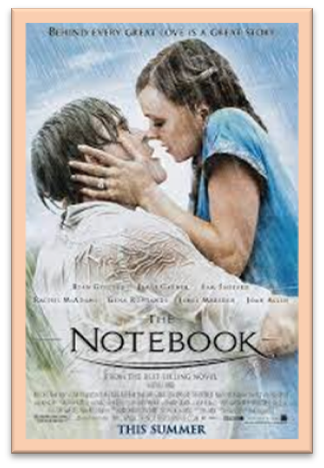
The Notebook (2004)


Me Before You (2016)


    Beauty and the Beast (2017)


        Purple Hearts (2022)


Friday, October 27, 2023

Sound Project


The sound project was meant to assess the different variations of sound that can impact any film. Sound effects, dialogue, narration, and music help listeners visualize the story without or with the visual aspect. This project helped us understand how to construct and overlap different sounds to create a narrative without seeing it. By hearing the distinctive sounds, I could understand their differences. For instance, the sound of footsteps can indicate the location an individual is in, depending on whether they are stepping on grass, concrete, or a carpet. In our case, we used a high heel on concrete, which later the individual started stepping into hard tile. The distinction implied that she entered somewhere else, but that alone was insufficient; we had to incorporate other sounds, too.

When creating the project, we had to think of an idea incorporating many sounds. Usually, public places have a wide range of sounds, but we had to ensure that the sounds were manageable. Once we established the location, the concept, and the sounds, we assembled an outline. The outline included minor and significant sounds that occur within the scene. We ensured that any possible sound was included, whether from the background or movement. Some sounds were difficult to find online, so we incorporated Foley. Foley can be created from any source to accommodate the essential sound. Footsteps and door swinging were the most difficult to find digitally, so we used sources from our homes to create the sound.

Overall, creating and assembling the sounds requires paying attention and accurate timing. The project was a minute and thirty seconds long, with diegetic and non-diegetic sounds. It was a scene of a lady getting stuck in an elevator. We used elevator music, dialogue interaction with the lady and reservation desk, and sound effects of people for diegetic sounds. For the non-diegetic sounds, we created three foley sounds. While hearing each sound, we had to identify the tone and mood it presented to the scene, which assisted in summing the final product. All these factors are vital in creating and modifying an audible story.

Foley Video: https://drive.google.com/file/d/1zaIb0j3oBK9UOt9RZk0OGTsR40v5ZjyJ/view?usp=sharing

Sound Project: https://drive.google.com/file/d/1DZwgJUiKHfc59ySsM0smm5ZltAVTLk9S/view?usp=sharing  


Friday, September 22, 2023

Camera shots/angles

      In order to assess different camera shots and angles to determine the story, the project needed an establishing shot. The story took place in school, so I took a long shot of the school building with the name. Then, for the viewers to understand that the story takes place during school time, we assembled a long shot image of the door indicating that the character is going in. The door can symbolize a series of possible events that could take place in a day.  

          Afterwards, the extreme closeup of the clock handle on the time class starts specifying that students should be prepared and in their seat. There is a variation of medium and close-up shots of the student “supposedly” doing the assignment, but instead the student is doodling. Then, a two-shot image of her friend inputting in the creativity. The other student gets in trouble by the teacher and the angles of her and the teacher establish who has the upper hand in the situation: the teacher. Consequently, viewers understand that the over shoulder angle shows that the student is being scolded by the teacher.  

        To create this project, me and my partner had to think of how the viewers would approach each image. The high angle image of the teacher and low angle of the student right after each other show that the student is not doing the task assigned. Then, the over side of the door where the student is being scolded is meant to display the expressions. When taking these into consideration, it conveys the message better. 

        I believe as we were immersed in creating the project, we did not convey a clear macro analysis. Overall, the production of the story felt concise, and the viewers can understand the plot line. There are numerous things that should have been taken account for before and after, but the execution of shots was present. 


Thursday, September 21, 2023

Background

 Hi! My name is Sarah. I am creating this blog for my Aice media class. 

Creative Critical Reflections

CCR PT.1 💗 Link :  https://drive.google.com/file/d/1JRZGko6tDBh06DsIypJ0goR-9N6U-5l_/view?usp=sharing CCR PT.2 💫 Link : https://drive.goog...